



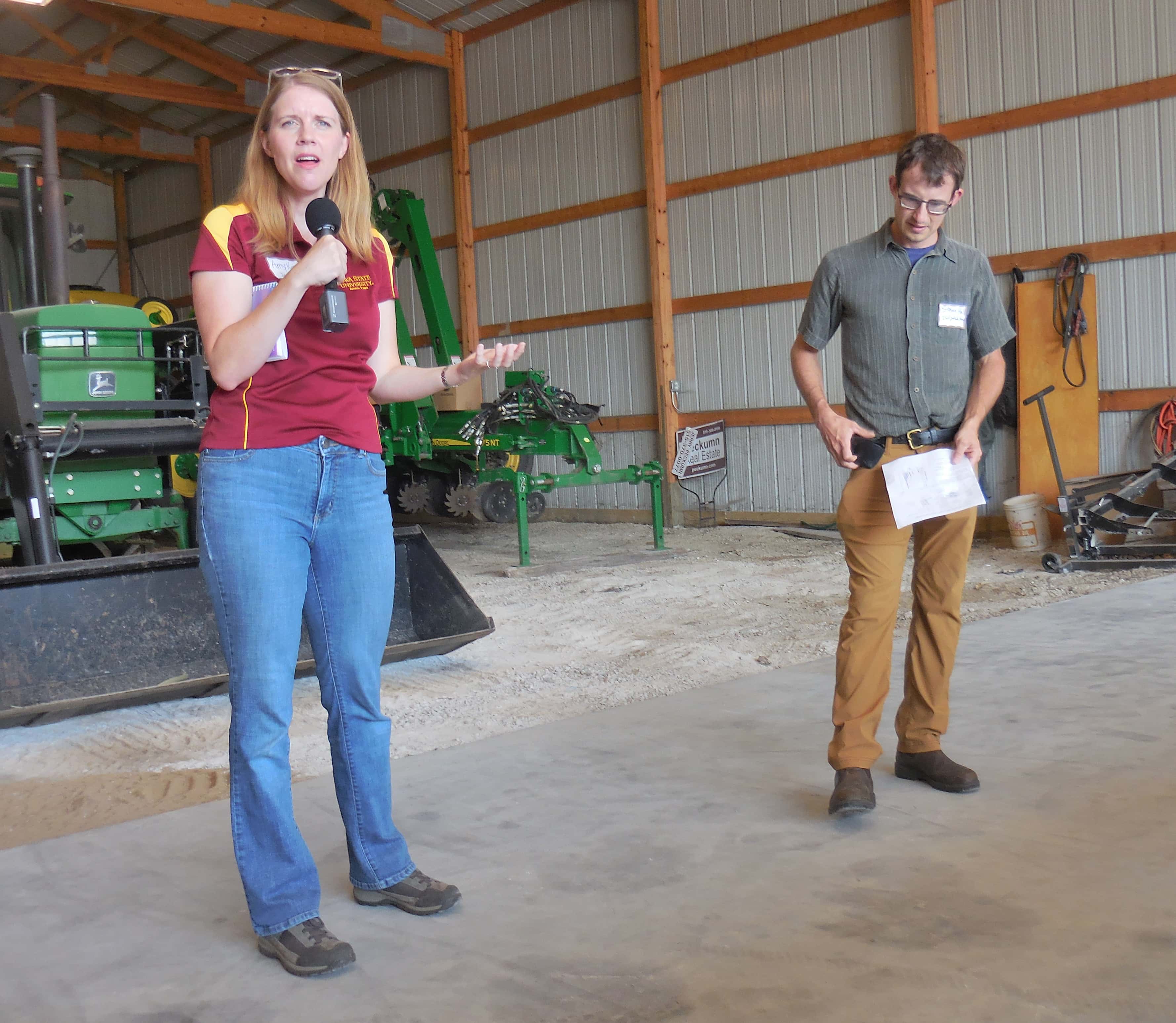
About 25 people attended the Practical Farmers of Iowa presentation at Jerry Peckumn’s farm Thursday.
The event focused on prairie potholes and utilizing conservation practices, like prairie grass, for agricultural profitability. Iowa State University Agricultural Engineer Amy Kaleita and Biogeochemist Steven Hall talked about what potholes are, why they are difficult to deal with and ways to better manage them in the future.
ISU is currently monitoring two plots of land where there are potholes, including one plot that is in the Conservation Reserve Program (CRP). One of their findings was that neither corn nor soybeans could robustly survive in more than one-centimeter of ponding water at any time. Even if there is an intense drainage system under the pothole, it will still flood regularly.

Kaleita said one solution for potholes is to retire them from crop production and into CRP. Another solution is to plant an energy grass, like miscanthus, and changing tillaging practices as a preventative measure for pothole flooding. She explained what she found by changing tillage practices to increase filtration of water to potholes on their own research plots.
“On average, we reduced the number of days of standing water in May or June from four-five days on average to two-three days on average. And in general, by switching to a less aggressive tillage, we reduced the changes of a yield-loss type flood, over half the pothole, from 30-percent to 15-percent.”
The event ended with a tour of some of the other conservation practices that Peckumn has on his farm.