



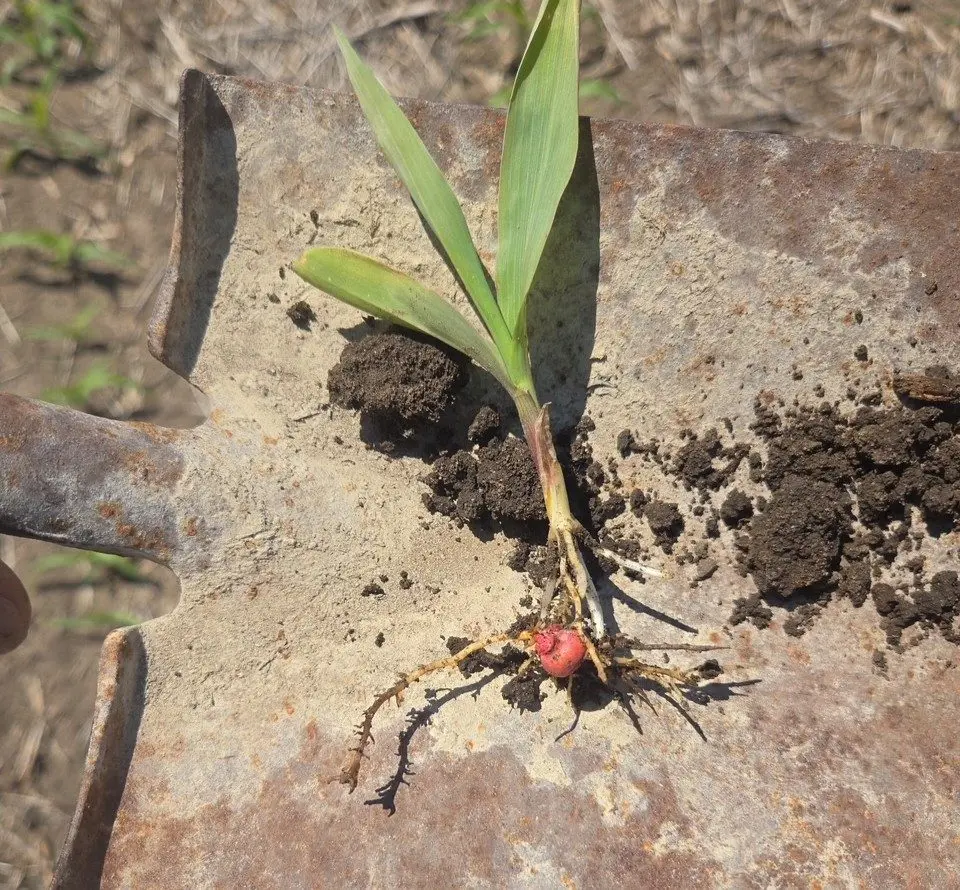
Photo courtesy of Dan Bjorklund with Landus
With most corn emerging across the state, there have been widespread issues appearing that have been impacted by weather conditions.
Landus Cooperative Field Agronomist Dan Bjorklund says he has been busy answering calls from farmers about a couple of issues with corn, with the first being some yellow discoloration on the plant’s leaves. He tells Raccoon Valley Radio this was an obvious sign that some areas of corn were in distress, mainly from what happened with the weather conditions that stemmed from earlier in May.
“Because we went from the early part of May until almost 85 degree days and then we had that cold front come through, but it came through with 50 miles per hour sustained winds that Friday, and it just beat the corn up pretty good, (with) lots of sandblasting.”
Bjorklund notes that newer planted corn has had greener leaves, but due to colder temperatures, the overall progression has been slow. He points to another problem he has been seeing are varying heights in some corn rows and when examining the roots of those plants, the roots were stunted, which he believes is the result of anhydrous burning.
“I got a feeling that maybe we tried to go and it was a little bit too wet and it didn’t seal properly. And so what happens is you get that anhydrous pretty shallow. And we got planted into that and there’s just enough nitrogen there that it was just too hot.”
Bjorklund says there are two reasons for this happening. The first is when anhydrous applications were done last November, following three straight weeks of rainfall, after enduring three months prior to that having dry conditions. The other situation was from this earlier this spring when applications happened during the wetter time periods. He recommends always applying anhydrous at a depth of eight inches to prevent these issues from happening.