



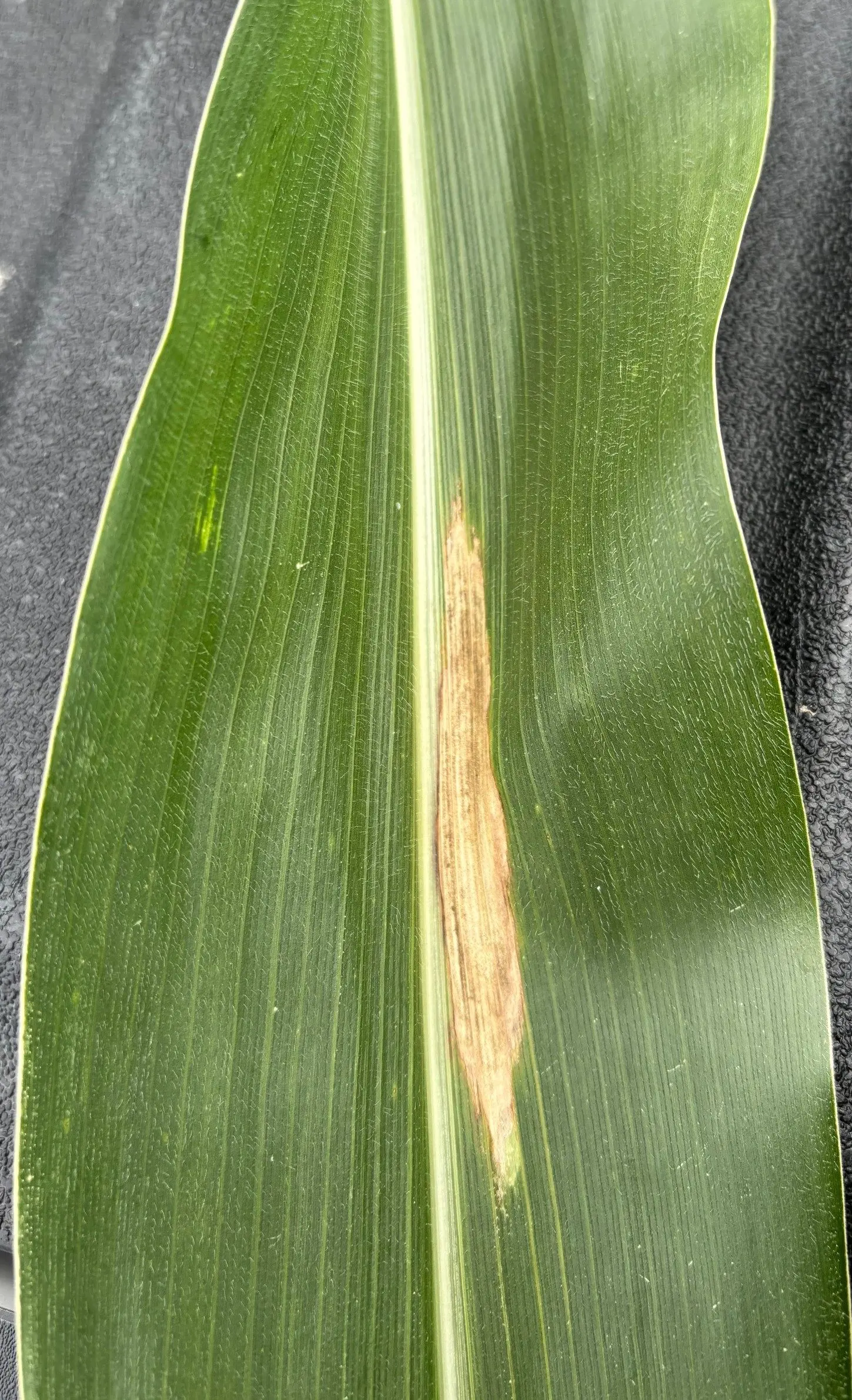
Northern Corn Leaf Blight. Photo courtesy of Dan Bjorklund
Oversaturation of farm fields have given causes for concern of potential breeding ground for diseases.
Landus Cooperative Field Agronomist Dan Bjorklund says the several inches of rainfall, coupled with hot temperatures for a few day stretch, then back to more rainfall, before heading into cooler temperatures have brought on different signs of corn-related diseases, as he depicts one of the more common types that are starting to be more prevalent.
“A lot of rainfall, 70 degree temperatures, diseases that are present, and then the host being the corn – which is that disease triangle – really, really concerns me because this week, I have seen more northern corn leaf blight. And that disease likes wet conditions and cool conditions, and that’s what we’re going to get.”
Bjorklund notes that these are cigar-shaped tan lesions that can start out being 1-2 inches, but can grow to six inches in length. He points out that it is important for corn to maintain as many leaves as possible to help fill out the ears in August.
Other diseases that Bjorklund has found primarily in Jefferson and northern Greene County are tar spot and gray leaf spot. He suggests that farmers do an assessment to find out if there are any diseases in the cornfields and then make a treatment plant if needed with herbicides, because there is about a ten day window in which to make those decisions to keep more issues from possibly coming up.