



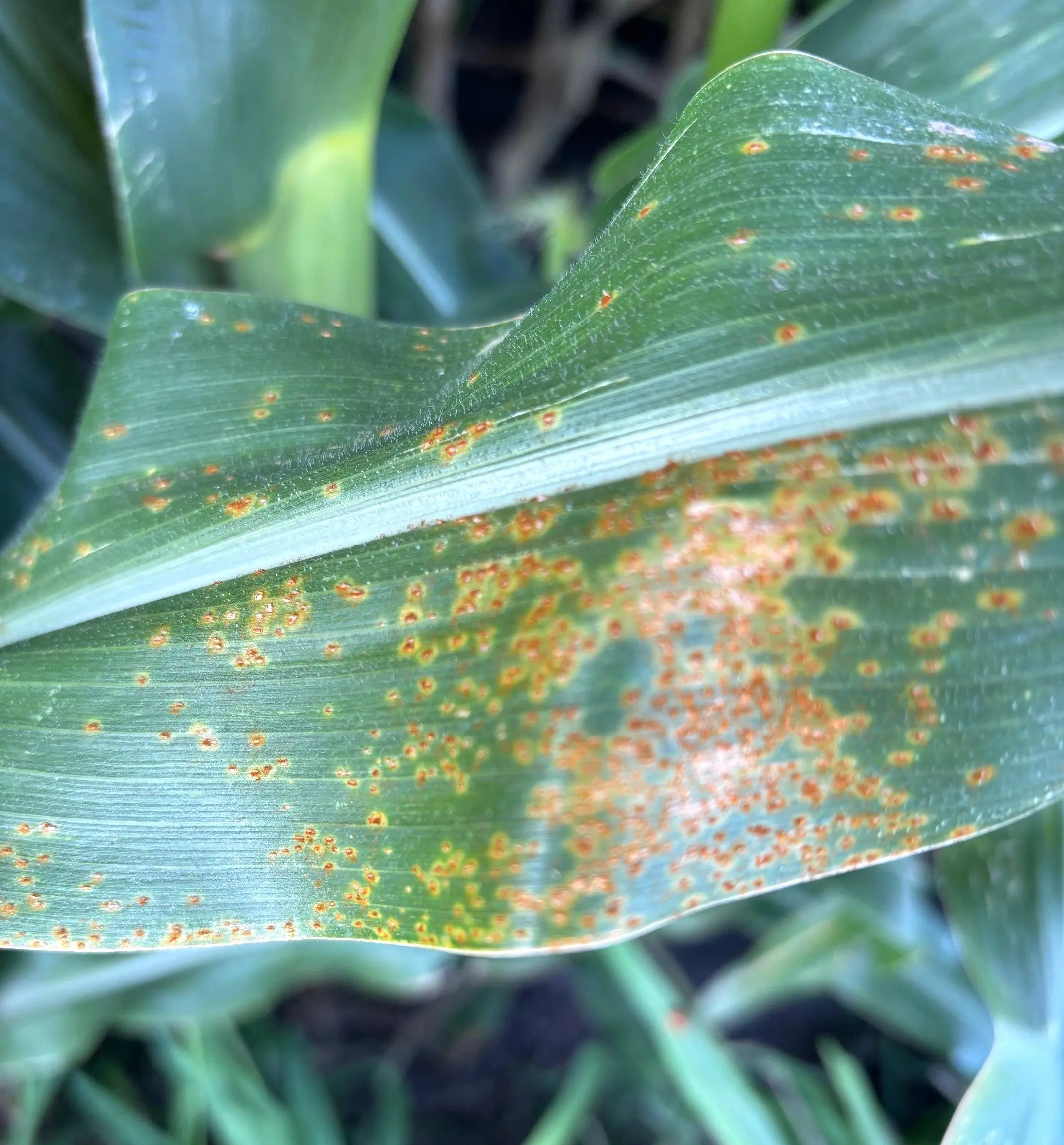
With a considerable break from a wet July, an expert in agronomy shares his thoughts on the impacts of corn and soybean conditions in Greene County.
Landus Cooperative Field Agronomist Dan Bjorklund says farmers who decided to use fungicide against the prevalent southern rust disease may see a better potential for yields at the end of the year. Otherwise, he comments on the overall condition of corn within the county.
“You know anytime you think about July getting 8-10 inches of rain and some of those areas where there were four and five inches at a time is not good, there’s always going to be some of that. But considering, the way the year has gone, I think we have some really good yield potential in corn.”
Bjorklund points out that fields that were impacted by southern rust would need to continue to monitor those areas and consider planning to harvest them accordingly to prevent any standability issues, which is a secondary effect from the disease.
Bjorklund says for soybeans, anytime there is wet seed, it can be more of a potential breeding ground for disease, and the one main problem that he has seen is sudden death syndrome.
“The leaves almost get skeletonized. The veins stay green but the tissue between the veins dies. So you see it popping up in the interim.”
Other soybean diseases that can happen with wet years like this year, Bjorklund adds that those include white mold and brown stem rot.