



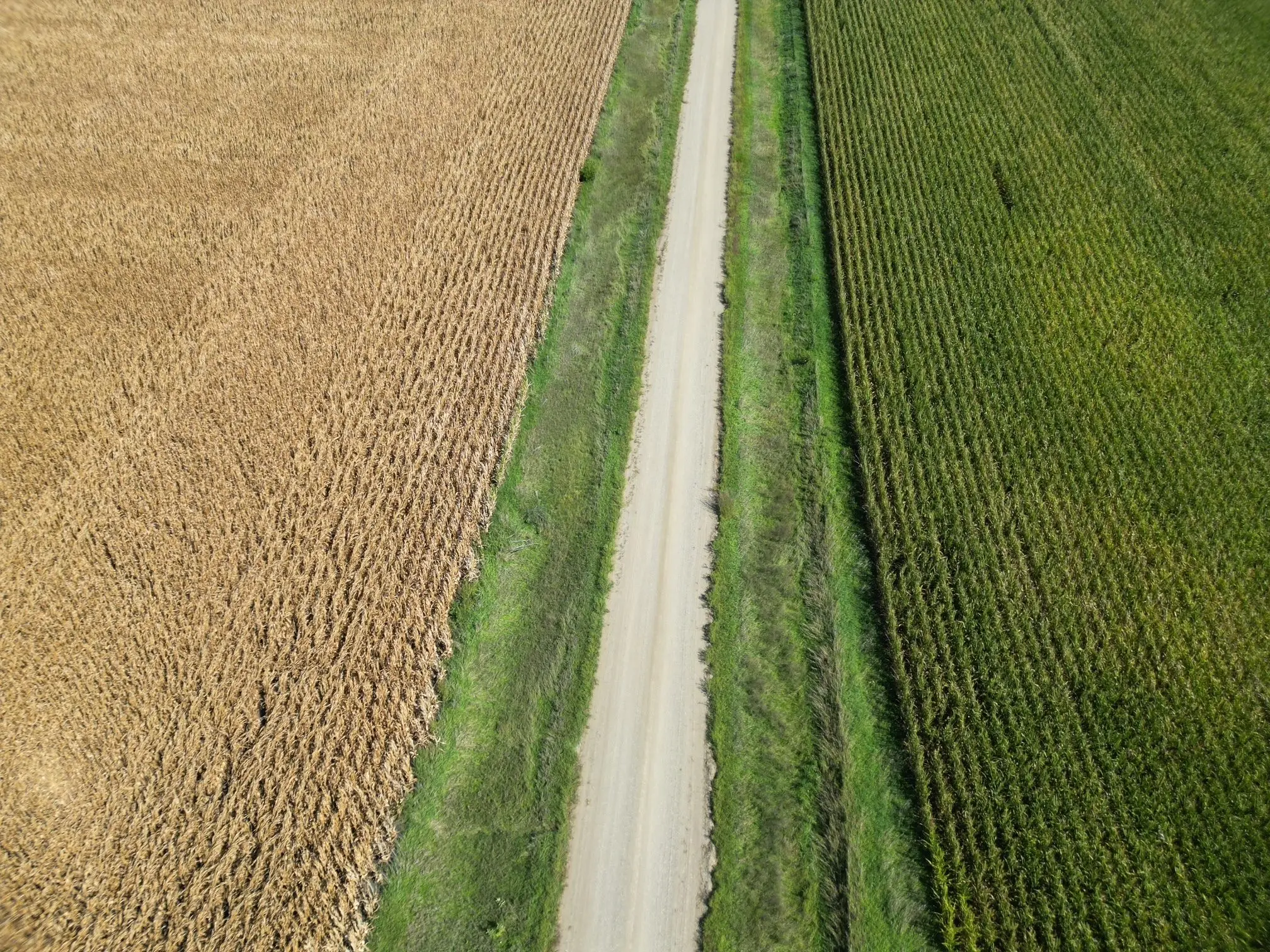
Corn field that didn't have fungicide applied versus one that did (right). Photo courtesy of Landus Cooperative
Farmers who decided not to use fungicide may see more of a negative impact on corn now then perhaps before.
Landus Cooperative Field Agronomist Dan Bjorklund says there are corn fields that are very brown, which is slightly ahead of where corn should be, and the main reason for that is an increase in some diseases because of the abundance of rainfall earlier this summer. His concern is the health of the corn stalk and the standability of it. He describes one such field where he conducted a further test.
“I call it the ‘push test.’ I go to ten plants and I push them into the next row and if they kink over, they are compromised. I was 10/10 in that field, and I did it two or three different times, so 100 percent compromised. Those stalks are paper-thin.”
Bjorklund points out that naturally occurring nitrogen is a benefit for corn, but again, with the eight to ten inches of rainfall in July, the nitrogen left the plant.
“So you get leeching, which moves it out of the root zone. And then, in some fields that stayed wet, then you actually get the nitrification where it just evaporates up into the atmosphere. So either way, you lose the nitrogen.”
Bjorklund adds that despite some of those challenges, yield potential should still be in fairly good shape after harvest season.