



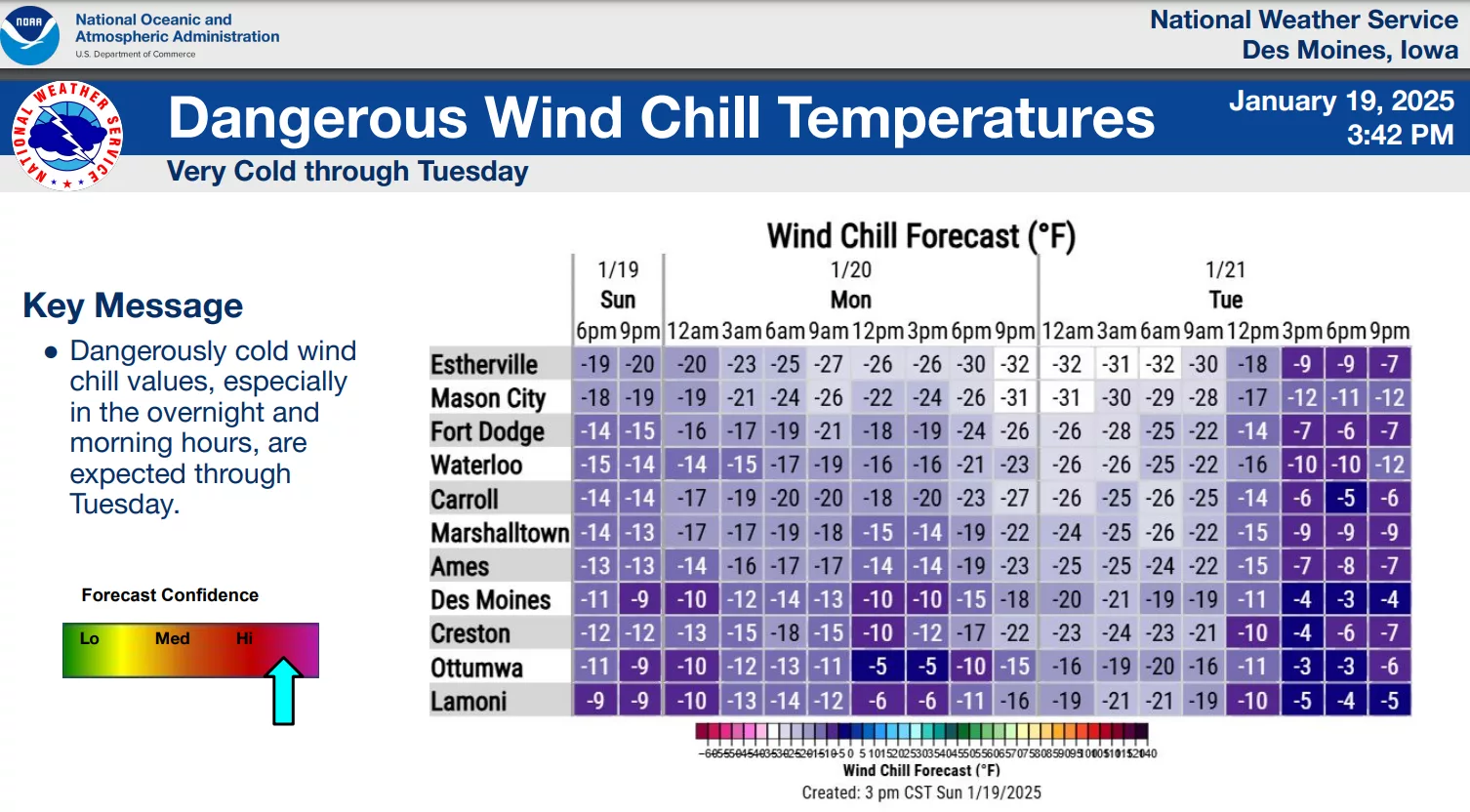
Image courtesy of NWS
Double digit wind chills are back in the forecast and with that is a greater risk of frostbite.
Greene County Public Health Director Shelby Cooklin says frostbite happens when the skin freezes and damages the underlying tissue. She describes the first or early stage is called frostnip, and the symptoms are numbness and tingling of the skin, but no permanent damage is done. She advises that if someone starts to feel numb or tingly skin on their extremities or any exposed skin, they need to move inside and can use warm water to warm up faster. Cooklin stresses to not use hot warm as a re-warming agent on numb or tingling skin.
“A lot of times if your skin is very cold to the touch or you’ve noticed numbness or tingling at that point, you don’t have your full sense of touch or feeling. And so when you start putting it under hot, hot water right away, that can cause heat burns to your skin, that can burn your skin, and then that can make the problems worse.”
Cooklin explains the next stage of frostbite is mild or superficial which causes the skin to change colors and when it re-warms, the skin will look patchy and have a stinging or burning sensation, as well as swelling. She notes blisters may form 12-36 hours after warming up. Cooklin points out the final stage of frostbite known as “deep” where the skin is white or blue-grey and waxy looking. She states that large blood blisters will form 12-24 hours and then it could be weeks afterwards when the skin turns black and hard, and finally dies. If someone has either of these stages of frostbite, Cooklin urges those individuals to seek medical attention.
Cooklin recommends to prevent frostbite, people should limit their time outdoors, wear several layers of loose-fitting clothing, along with wearing a stocking hat, mittens, a scarf and socks to protect extremities.